Sunday, April 20, 2008

Winning

I was in a sales interview the other day and the VP of Sales asked me what is one of my weakness. This is one of those unnerving questions cause no one usually likes to talk about one's weakness. But I've learned that awareness of your shortcomings is definitely what helps you grow. My answer was simple. I think my weakness is that I want to Win everything I put my mind into - seriously.

Why is this a negative, right? In sales, it sometimes leads to win loss situations where the deal is no longer proftiable. In real estate, you end up paying too much for a property. Like today, Jenna and I were shopping for another investment property in SF. I was pretty luke warm on a property that my wife really likes. Then when I went back to see the property the 2nd time around, I saw all the potential that Jenna saw in the property. When this happened, a trip wire went off in my head, and I made up my mind that I wanted to Win this house. In SF, buying a house is cut throat competition and you have to overbid significantly to win a deal. When I overheard one other couple saying that they really like the house, I got all fired up. It just added fuel to my desire to win the house. I thought of telling them, "Sorry, you're going to lose, and I'm winning this house, whatever the price." Obviously, it's not advisable to invest this way. You need to find your walk away position. Otherwise, you'll lose your shirt.

In cycling this Winning attitude can easily become a negative for a number of reasons. First of, it's impossible to win all the races. In fact winning is a very difficult thing in cycling and wins are usually distributed to a select few. Moreover, I think there are times to burn the matches and when not to. I only have a limited number of bullets and when I use one up for a training race, then that's a wasted bullet. I did this before the LA world cup and dug a little too much at an early bird crit, where I tried to close a 30 sec. gap to a strong break of 8. I almost caught the break, but I dug myself a hole and was flat in LA. Finally, winning as an absolute thing like who crossed the line first, is the wrong way to look at bike racing. I've learned that it will leave you feeling empty and demoralized since as discussed above, the winning moments are few and far between. Better than absolute is to define your win. I was talking to Roman about this. As a pro for Healthnet, he defines his win in terms of how well he is progressing towards being a great team domestique and personally, if he's continuing to improve as viewed objectively by his coach and training data. How you define your wins can help you enjoy racing better.

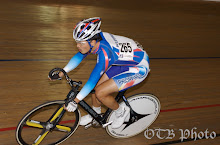
This reframing and redefinition of what it means to win is a lesson I have to continually remind myself when I get on a bike. Believe me, everytime I get on a track bike I want to kick everyone's butt - right Warren? My chilled out demeanor belies an internal rage. I hate losing even if it's a training race and I'm grossly out of shape. I don't care about the excuses. So it's especially hard for me. But then, I'm reminded of my friend, Craig's story. Craig finished the Wildflower triathalon long course close to the bottom of his age group. On paper, he was 2+ hours down on the guy who crossed the line first. But to his friends and family, who knew that 5 months before Wildflower, he had undergone chemotherapy and radiation to batttle an aggresive lymphoma cancer, Craig was the Winner. But, if you only measure winning in absolute terms, then the guy who crossed the line first, won. However, if you defined winning as living and courage against the face of death, then my buddy Craig is a Winner.

In terms of the Headwind Award, look for each riders' silent evidence - the non obvious, the next time you want to observe a winner. Everyone has a story and I encourage you find it and share it to the track community.
Sent via BlackBerry from T-Mobile

Friday, April 18, 2008

No Country for Old Men

Actually, the Hellyer track IS a country for Old Men =). I think we have more successful masters racing compared to any other category. But that's not my point in talking about No Country For Old Men, a movie by the Coen Brothers based on the book by Cormac McCarthy.

When I first read the book, I'll be honest, I wasn't really a fan of it. There were unresolved conflicts, jumps in points of view, irregular punctuations. In short, it didn't make a lot sense to me. 6 months later, after reading books on risk, randomness, chaos theory (nonlinear), I finally understand what Cormac was saying in his book. The book is brilliantly original because it is written to reflects the unstructured randomness of life. Sh*t happens, and sometimes there's no rhyme or reason for it. It's hard for many of us to comprehend this since we're rational thinkers. We need an explanation even if there isn't one.

In cycling, when things don't go our way in a race, we second guess a lot of things we did to try to make sense of what happened. What went wrong in our training, what did we drink/eat, or not etc? We want a reason for the cause -a narrative fallacy. But life is not that simple or always controllable for that matter . Things happen and you just have to say brush it off. Beat it and bounce! Seriously, there's no sense second guessing yourself .
There's a lot of unstructured randomness in life and cycling, too.

I had a great conversation with Roman during our drive down to the track on Wednesday night. I brought up the idea of randomness and nonlinear progression to him. He's a really smart dude. And I have a lot of respect for what he's achieved, on and off the bike. He got his law degree from Hastings while he was racing as a pro for the top domestic cycling team, Healthnet. He was telling me a story about how he placed in the top 10 at the Sea Otter Road Race while riding for a small DIII pro team McGuire. At the time, Sea Otter was an NRC race and attracted a lot of the best pros. His ride was a break through result and caught the attention of some bigger pro teams. He re-calls thinking how he was flying. But then the following week at a much easier race with less competition, he got dropped at the Wente Road Race. He didn't even finish the race and drove home, bewildered. WTF? It didn't make sense why he had such a bad performance a week after a break through result. But then the following week, with no expectation at all, he won a difficult stage race back east.

When things don't go your way, just remember that progress is nonlinear. There's a lot of chaos and randomness that we can't account for or make sense of. But regardless, keep trying and it all works out in the end. Good luck racing this weekend!

Monday, April 14, 2008

HiBaller of the Week - April 7-14

Please submit your vote on the comments section and give your reason (if you want)! Anyone who is not a Cat 1 or District/National Champ is eligible for the award.

The weekly award is a 4 pack of HiBall + something else. Weekly votes count towards the overall prize of:

$250 cash minimum
$500 worth of HiBall products
$Swag

Tuesday, April 8, 2008

The Mind of a Tiger - Great interview


When you hear him talk you can understand why he's the best. There's something in the way he thinks that sets him apart. I can't wait to watch the Masters and Paris Rubaix this Sunday. It's the best Sunday in sports!

Sunday, April 6, 2008

Headwind Award presented by Hi*Ball


I read once that you should never dream like a bank manager, who assesses your worth based only on your REALIZED potential. The greater part of all of us is our UNREALIZED potential. Therefore, this award is for the male and female Hellyer Trackies who are trying to make the leap and breakthrough the winner's podium, but haven't yet done so. I personally want to encourage these riders to persist as they strive to achieve their goals. As I've finally realized, progress is nonlinear. A lot of times it seems there is nothing but a headwind, but keep trying, and never give up. Inevitably, you'll catch your tailwind. In the meantime, have a Hi*Ball-- it's good energy (way better than red bull).

Overall Prize:
  1. Cash award (minimum of $250 - max - tbd)
  2. Headwind Winner Jersey
  3. Cases of Hi*Ball Energy Drink ($500 value, enough drinks for a kick a@@ party)
  4. Schwag - Tires, Shirts, Caps, etc.
How it works:
There will be 1 Male and 1 Female winner for the season long contest. The season will run from April to August. The winners will be voted in by your Hellyer peers on a weekly basis. The overall winner will be the top male and female trackise who receive the most votes over the entire season. But, the weekly winners will be rewarded with a nice cold Hi*Ball 4 pack + other goodies.

Qualifications:
This award is only for those who have not YET made the leap. Cat 1's, district, or national champions are NOT eligible. Let's give others a chance to win.

Voting:
I hope everyone from Hellyer participates in this contest. I'll setup a weekly voting link on my blog every Thursday morning. Post your votes in the comments section by Sunday before the next weekly series race. I will keep track of all votes and will announce the weekly winners every Monday night on my blog and the Hellyer/NCVA google groups.

One last word:
This Award is for every person who keeps spinning his or her wheels against a headwind but is still dreaming of one day making the leap-- no matter what level. Winning is not simply about who crosses the finish line first. The victory line can be anything and for this award, it's for those who persist.

Monday, March 31, 2008

The Regular Guy and Nonlinear Progress

I'm just a regular guy. A regular highly competitive emotionally driven guy. And as I'm writing this blog, I am finally realizing that our extraordinary dreams progress nonlinearly (meaning the road to the top is not a straight line.) This is a big challenge for us regular guys. Do you have the mental stamina to make it through nonlinearities (ups and downs)? How do you stay focused and committed to the impossible goals? Most people give up before the rewards. But why?


We struggle with nonlinearities because our brains prefer to think in linear terms. For instance, if you train everyday, then you expect to get faster in proportion to the number of hours you put in. "But reality rarely gives us the privilege of positive progression." Often we train very hard for weeks, months, and years and may only see incremental improvement, if any. But then if you are not disheartened and continue to persist, suddenly you'll reach that tipping point, your payday. Malcolm Gladwell's ketchup bottle story simply summarizes the fundamental nonlinearity of everyday life: We tap the bottom end of a ketchup bottle, and nothing happens, we tap and tap..."None will come and then the lot'll." Just like in life, you try, and try, and try some more, and nothing happens. But if you don't become demoralized, and truly persist, then maybe you might be lucky enough to cash in!

But most people can't see it through the end (what ever the end maybe). I think the way our minds are wired makes a big difference. Some can handle nonlinearities better than others. There is a neural and success correlation.

A little more dope please? When failure presents itself we get less doped. I mean our dopamine system drops if our expectations are not met. Our pleasure brain system is somewhat like the stock market. It monitors how we do relative to the expectations. If we don't meet 'market' expectation then our brain produces less of the pleasure neurotransmitters and you end up feeling down. And it's even worse when you succeed early then the expectations become larger - (phenom challenge). The paradox of success is that it takes more and more success to fuel the brain and the inverse is true, failure is exacerbated. "Our minds are like inmates, captive to our biology, unless we manage a cunning escape."

I know of a friend who accomplished a lot in cycling in such a short period. She started racing after doing the Aids Ride and quickly got hooked. She upgraded to a Cat2 in less than 2 yrs. And for a while it seemed that success was linear. Then she got an expensive coach, made the commitment to train harder and longer, and made the necessary financial and personal sacrifices with the belief that if she puts in the work then she would be rewarded with a proportionate amount of results. Unfortunately, success maybe more opaque than we think it is. We know what we put in: hard work with our eyes firmly focused on our powermeters. But what comes out is not always clearly evident sensational success. After 2 years of spinning her wheels, frustrated, and demoralized, she quit racing altogether. It's a shame because I think she could have eventually achieved her goal. But like many of us, who've tasted defeat once too often, it becomes increasingly difficult to stay on course.

According to researchers who study hedonic happiness. "Making $1M one year, but nothing in the preceding nine, does not bring the same pleasures as having the total evenly distributed over the same period, that is, $100,000 every year for ten years in a row. The same applies to the inverse order - making a bundle the first year, then nothing for the remaining period. Somehow, your pleasure systems will be saturated rather quickly, and it will not carry forward the hedonic balance like a sum on a tax return. As a matter of fact, your happiness depends more on the number of instances of positive feelings than on their intensity when they hit. "

In other words, you need small wins consistently. But how do you achieve this when the path to the extraordinary is nonlinear? What do you suggest? I've thought about this a lot and read a lot on neuroscience ,psychology, and philosophy.

"When the little guy doesn't know he's the little guy, he can do great things." Unfortunately, the brain is not fooled too easily. Nonetheless, I believe that a regular guy can achieve great things if he can have the right mental model to deal with nonlinearities. I'm in the process of writing a book and I want to hear your stories of nonlinear progression and how you dealt with the ups and downs as you continue to chase your dreams. Email me at stevepelaez@gmail.com THANKS!

Thursday, March 13, 2008

"Maybe this is the END?"


That's what Mark, my mechanic friend, said to me immediately after I finished the scratch race in Denmark, where I suffered just to finish with a fever. Mark had me cracking up with this comment. And I needed it. It's a play on a previous quote, "Everything works out in the end. If it doesn't, you're just not at the end yet."

I asked Mark, "Why can't I just catch a break?" He said, "Maybe just being here is your break." He's right on both accounts. This is the end of my professional cyclist lifestyle, and this entire experience has been a break from reality. I've been living in a dream.

My 2 brains, the emotional and the rational, offer two different perspectives on the whole experience. Emotionally, it's sad and frustrating that it's all over and I didn't achieve my goal, however improbable. I desperately want another shot at goal. But, my rational mind can create a positive spin and see the silver lining.
I'm proud to have represented the the 87 million Filipinos against the best in the world. I was racing against the best professionals who are younger and faster than me and have been training full time and competing at the world class level for many years. My expectations were obviously unrealistic.
Actually, my coach Vlad keeps reminding me that I did great for a first timer and it's not possible to make the leap to the podium in the first year (unless you're a phenom like Phinney - a proof of genetics). So I asked him why the heck he didn't tell me this in the beginning. He just smiled back. BTW, my coach is an Olympic gold medalist and world champion and it took him 10 years of focused, relentless training to succeed at the World Cup level.

I guess it didn't matter what the odds were. I was still going to try. Logically, I knew I had no shot in hell. But emotionally, I wanted to stomp the competition and make it to Beijing. This delusion may have been partly due to watching Rocky I & II, one too many times. Anyhow, I know I'm just wired differently. I'm highly competitve and a dreamer. And so being a long shot are good odds. But the epistemic truth is that progress takes time. Progress is nonlinear. But my emotional brain wanted to believe in the improbable and linear causality. I.E that if I put in all this hard work and sacrifice, then I would be rewarded with an Olympic spot. In fact, getting to the Olympics is even more complicated that I had ever imagined. There are all these rules that limit the number of participants. Only the top 8 in the pts. race can go since the UCI gives priority to riders from the Top 8 Madison teams. It's a ridiculous, unfair system. It's not like the Jamaican bob sled days when every country could just go to the Olympics. It's now such a commercialized event that the entries are limited. I don't think there is an ASIAN country going for the pts. race - unbelievable.

My friend Robin told me that, "Life is lived forward and understood backwards." That's been the case with this entire experience. I was so caught up with the intensity and focus of the training, travel, and racing of the World Cup events that I may not have enjoyed the moments as they actually happened. But retrospectively, as I recall them, I have nothing but fun memories of the cool places I've raced and the great people I've met. And most of all, I'm proud that I was able to make a difference in the lives of impoverished children in the Philippines by raising money for the PCFA charity. If you haven't yet done so, please consider donating to: www.firstgiving.com/2008olympics . Thank you for reading and your support! You've made this a truly meaningful experience.